The Gobi goat and cashmere: from a −40° winter to your scarf
The softest fiber on Earth is grown by the hardest winters. Here is how it happens, who gathers it, and why it matters for the steppe.
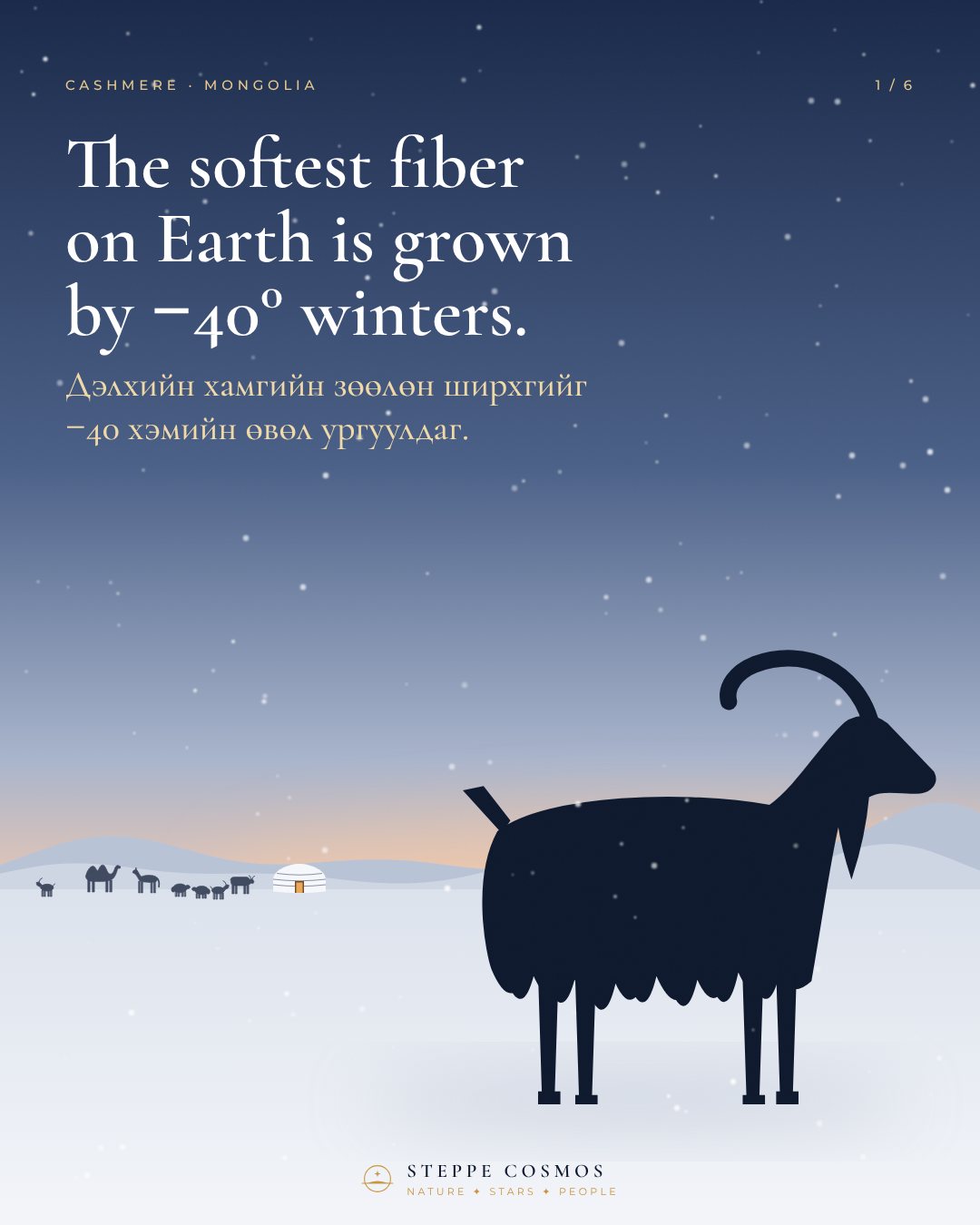
Picture a January night in the Gobi. The temperature drops to −40°. There are no trees, no walls, only open steppe and stars. A goat stands in that cold all winter and survives. Its secret is a layer most people never see.
A coat under the coat
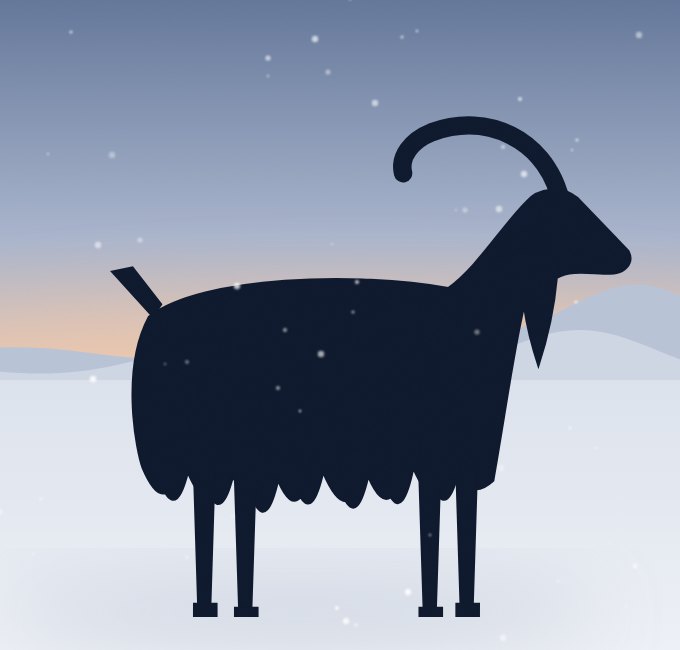
A cashmere goat has two layers of hair. The outer layer is long and coarse, and it keeps off snow and wind. Underneath grows a soft, fine undercoat that traps warm air close to the body. That undercoat is cashmere.
The goat grows it through autumn and winter, and the colder the winter, the more it needs. This is why the high, dry, freezing lands of Mongolia and northern China produce so much of the world's cashmere.
Combed by hand in spring
When the weather warms, roughly from March to May, the goats begin to shed their winter undercoat naturally. Herding families catch each goat and gently pull the loose fiber out with a metal comb. Combing gathers purer cashmere than shearing, which mixes in more coarse hair.
It is slow work. On average, one goat gives only about 150 grams of cashmere a year. A light sweater can take the yearly fiber of two goats or more.
What makes it cashmere
The word is not just a name. To be sold as cashmere in the United States, the fiber must average 19 microns or less in width. That is several times thinner than a typical human hair, and it is why cashmere feels so light and soft on the skin. Mongolian cashmere is known for being long and fine.
Mongolia and the world
Mongolia is the world's second-largest producer of raw cashmere, after China. At the end of 2025 the country had about 58 million head of livestock, and roughly 40% of them were goats. That is around 23 million goats.
For many herding families, the spring combing is one of the most important incomes of the year. Yet about 80% of Mongolian cashmere leaves the country unprocessed, and only around 20% is turned into yarn and garments at home.
The cost to the land
Cashmere has a hard side. Traditionally, Mongolian herders kept about three sheep for every goat. As cashmere became valuable, goat numbers grew until goats and sheep now graze in roughly equal numbers. Goats eat grass close to the root, and the land has less time to recover. About 70% of Mongolia's pastureland is degraded to some extent.
Herders, companies and organizations such as the UNDP are working on answers: better herd management, higher quality instead of more animals, more processing inside Mongolia, and tracing each fiber back to the herders who combed it.
Ноолуур (noolūr) means cashmere. To comb it out is самнах (samnakh), from сам, a comb. A goat is ямаа (yamaa), one of the таван хошуу мал, the five kinds of herd animals.
When you buy cashmere
- Ask where it comes from. A brand that knows the herders can usually tell you.
- Look for traceable or sustainable cashmere labels.
- Buy fewer pieces of better quality, and care for them. Good cashmere can last for many years.
Sources
- Cashmere wool, Wikipedia: fiber standard, yield per goat, harvest season.
- Mongolian Cashmere: Softer than a baby's bottom, World Bank blog.
- How sustainable cashmere is reversing land degradation in Mongolia, UNDP.
- Mongolia's number of livestock up by 0.8 pct in 2025, NAMPA / Xinhua.
Говийн ямаа ба ноолуур: −40 хэмийн өвлөөс таны ороолт хүртэл
Дэлхийн хамгийн зөөлөн ширхгийг хамгийн хатуу өвөл ургуулдаг. Энэ нь хэрхэн бий болдог, хэн түүнийг цуглуулдаг, тал нутагт яагаад чухал вэ гэдгийг хүргэе.
Говийн 1-р сарын шөнийг төсөөлөөд үзээрэй. Хүйтэн −40 хэм хүрнэ. Мод ч, хана ч үгүй, зөвхөн задгай тал, одтой тэнгэр. Ямаа бүтэн өвөлжин энэ хүйтэнд зогсоод амьд гардаг. Түүний нууц нь ихэнх хүний хардаггүй нэгэн давхаргад бий.
Үсний доорх нөмрөг
Ноолуурын ямаа хоёр давхар үстэй. Гадна давхарга нь урт, бүдүүн бөгөөд цас, салхинаас хамгаалдаг. Түүний дор биед ойр дулаан агаар хадгалдаг зөөлөн, нарийн дотор хөөвөр ургадаг. Энэ бол ноолуур.
Ямаа үүнийг намар, өвлийн турш ургуулна. Өвөл хүйтэн байх тусам илүү их хэрэгтэй болно. Тиймээс өндөрлөг, хуурай, хүйтэн Монгол болон Хятадын хойд нутаг дэлхийн ноолуурын ихэнхийг үйлдвэрлэдэг.
Хавар гараар самнана
Дулаарахад, ойролцоогоор 3-аас 5-р сарын хооронд ямаа өвлийн ноолуураа аяндаа гуужуулж эхэлнэ. Малчин айлууд ямаа бүрийг барьж, сул ноолуурыг төмөр самаар зөөлөн самнаж авдаг. Самнах нь хяргахаас илүү цэвэр ноолуур гаргадаг, учир нь хяргахад бүдүүн үс их холилддог.
Энэ бол удаан ажил. Нэг ямаанаас жилд дунджаар ердөө 150 грамм орчим ноолуур гардаг. Нэг нимгэн цамцанд хоёр ба түүнээс олон ямааны жилийн ноолуур орж болно.
Ноолуурыг юу ноолуур болгодог вэ
Энэ үг зүгээр нэг нэр биш. АНУ-д ноолуур гэж худалдаалахын тулд ширхэг нь дунджаар 19 микрон буюу түүнээс нарийн байх ёстой. Энэ нь ердийн хүний үснээс хэд дахин нарийн бөгөөд ноолуур арьсанд тийм хөнгөн, зөөлөн мэдрэгддэг шалтгаан нь энэ. Монгол ноолуур урт, нарийн ширхгээрээ алдартай.
Монгол ба дэлхий
Монгол бол түүхий ноолуурын үйлдвэрлэлээрээ Хятадын дараа дэлхийд хоёрдугаарт ордог. 2025 оны эцэст манай улс 58 сая орчим толгой малтай байсны 40 орчим хувь нь ямаа. Энэ нь 23 сая орчим ямаа гэсэн үг.
Олон малчин айлын хувьд хаврын ноолуур самнах нь жилийн хамгийн чухал орлогын нэг. Гэвч Монгол ноолуурын 80 орчим хувь нь боловсруулагдалгүй гадагш гардаг бөгөөд ердөө 20 орчим хувийг нь дотооддоо утас, бүтээгдэхүүн болгодог.
Газар нутгийн төлөх үнэ
Ноолуур бас хатуу талтай. Уламжлалаар Монгол малчид нэг ямаанд гурван хонь ногдохоор малладаг байв. Ноолуурын үнэ өсөхөд ямааны тоо нэмэгдсээр одоо ямаа, хонь бараг тэнцүү болсон. Ямаа өвсийг үндэс хүртэл нь иддэг тул бэлчээр сэргэх хугацаа багасдаг. Монголын бэлчээрийн 70 орчим хувь нь тодорхой хэмжээгээр доройтсон.
Малчид, компаниуд, НҮБХХ зэрэг байгууллагууд шийдэл хайж байна: малын зохистой менежмент, тоо биш чанар, Монголдоо илүү ихийг боловсруулах, ширхэг бүрийг самнасан малчин хүртэл нь мөшгих боломж.
Ноолуур = cashmere. Түүнийг самнах, самаар. Ямаа бол таван хошуу малын нэг.
Ноолуур худалдан авахдаа
- Хаанаас гаралтайг асуугаарай. Малчидтайгаа холбоотой брэнд ихэвчлэн хэлж чаддаг.
- Гарал үүсэл нь мөшгигддөг, тогтвортой ноолуурын шошго хайгаарай.
- Цөөн боловч чанартайг сонгож, сайн арчлаарай. Сайн ноолуур олон жил эдлэгддэг.
Эх сурвалж
- Cashmere wool, Wikipedia: ширхгийн стандарт, нэг ямааны гарц, самнах улирал.
- Mongolian Cashmere: Softer than a baby's bottom, Дэлхийн банк.
- How sustainable cashmere is reversing land degradation in Mongolia, НҮБХХ.
- Mongolia's number of livestock up by 0.8 pct in 2025, NAMPA / Синьхуа.